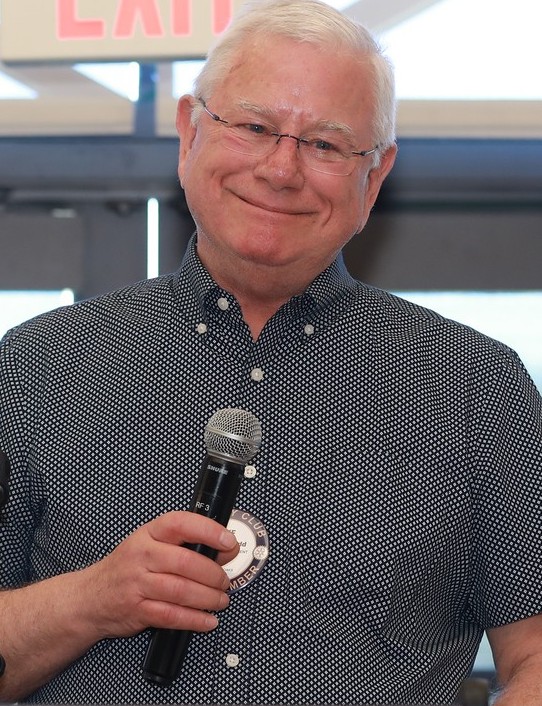
Michael opened the program by emphasizing that peace is not merely the absence of war or violence, but for example, can include the positive conditions that may reduce hunger, homelessness, and domestic violence. He highlighted the Club’s local impact through initiatives such as Harbor House sandwich making, support of Manna, the Chili Cook-off & Street Fair, the Storybook Project, and the Blood Drive.
Michael, in describing the term Positive Peace, among other things stated it as encompassing 1) a state of mind and society, 2) safety, security, & freedom, and 3) investment in education. He concluded by stressing that peace does not occur by chance; as Rotarians, it begins with individual action and has the power to transform lives.
A video followed Michael’s presentation depicting the work of the Peace Center where Peace Building has a role in creating Environments of Peace and Opportunities to Thrive. A key message was to dispel the old notion that “if you want peace, prepare for war and replace that with “IF YOU WANT PEACE, PREPARE FOR PEACE.”
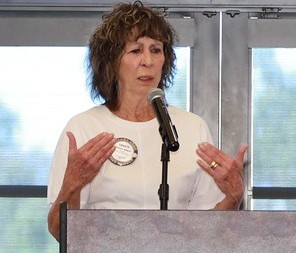
Christy’s portion of the Program was to tell stories of some of her firsthand experiences. Along with her husband, they opened an opioid treatment center in a disadvantaged area of Sun Valley, where homelessness and incarceration were common. The generational influences of mental & physical health problems trapped people in a subculture that often shaped and limited personal identity within the community.
Christy guided the audience with three visual pictures that she called her PENNY STORIES – vignettes about a middle-aged homeless woman named Penny:
1) Penny had a huge heart but was the victim of predators. News of the deaths of her husband & daughter while she was in prison led Penny to be suicidal. When she got out of prison, she was living on the street by the parking lot next to Christy’s center. Penny was living out of a shopping cart filled with trash bags and clothes. Christy recognizedthat a goal for Penny was to get her stabilized – to make a bridge to her humanness and reduce her disenfranchisement. When Penny was found to have emptied her shopping cart in the parking lot by Christy’s center, Penny found great purpose in meticulously putting all of her personal items back into the cart.
2) One day when Christy found a nickel on the ground by the Center’s front door, she broke into the children’s song “My name is Michael, I found a nickel…” and much to her surprise (and pleasure), Penny joined in song with Christy from across the
parking lot through several verses - this went on for a good while.
3) Penny could be complicated, but when you talked to her, she took you on a journey, which you were required to let run its course. Christy recalled when she was closing up for the day to leave and Penny remarked with conviction “Oh, you’re a REAL person.” Christy knew that this was a clear reference to her having a real home with real food
and a real bed to go home to.
In summary, Christy said the purposes of the vignettes were to briefly illustrate the sense of participation, joy, and value she received in observing and interacting with Penny, and to show the best way to get there was through listening and recognition. Christy hoped that the Club members in attendance “enjoyed the ride” as she told her stories.